{STORYTITLE}
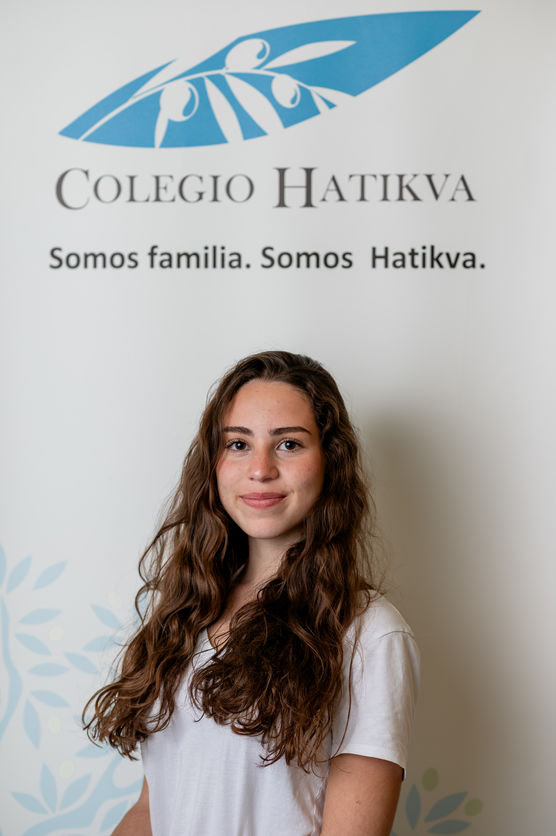
Name: María E
Gender: Woman
Country of residence: Spain
Writing language: Spanish
Read story below!

Story language
My Place Between Cultures
Mi Lugar Entre Culturas
Me llamo María, a mis 16 años, sigo estudiando en el colegio Hatikva, la escuela donde prácticamente he pasado toda mi vida. A pesar de no ser judía, haber crecido rodeada de esta religión ha definido como veo el mundo y la persona que soy actualmente.
Nací en España, Barcelona, sin embargo tengo doble nacionalidad. Soy mexicana de parte materna y española de parte paterna. Tengo dos hermanos; Pablo, quien tiene 17 años, y Frida, de 12. Mi hermano y yo solo nos llevamos 15 meses de edad por lo que hemos crecido a la par, pero ahora que ya acabó la ESO, ya no va al Hatikva, así que este año ha sido probablemente lo más separados que hayamos estado nunca. Por otro lado, con mi hermana yo soy la mayor y me ve como una guía, además de compartir experiencias. Nuestra perra se llama Brisa, y ha estado con nosotros desde que tengo 4 años, por lo tanto ha estado a mi lado prácticamente toda la vida.
Pese a ser cristiana, el judaísmo ha formado parte de mi vida desde la infancia. Mi madre al llegar a España como extranjera, quería para sus hijos un colegio internacional y con diversidad, para que crezcamos rodeados de diferentes culturas y pensamientos. Ya sea por casualidad o por el destino, las primeras amigas que hizo al llegar llevaban a sus hijos al Hatikva y finalmente decidió inscribirme a los 2 años.
Como ya mencione anteriormente, he estudiado toda mi vida en esta escuela, a excepción de un año que me fui a vivir a México a los seis años. Aun sin ser judía siempre me han hecho sentir bienvenida, desde pequeña, mis amigas me han invitado a compartir momentos importantes de su fe y religión; las cenas de Shabat, fiestas de Purim, los seders de Rosh Hashaná y Pésaj y muchas otras tradiciones. Siempre me han incluido con cariño.
Mis mejores amigas son judías, unas más practicantes que otras pero sinceramente, nunca ha sido un tema que nos diferencie. Nos tenemos mucho cariño y jamás he sentido que la religión, la nacionalidad o cualquier otro factor nos separara. Lo mismo pasa con mis compañeros de clase. Como hemos crecido juntos desde preescolar, hemos creado un vínculo inquebrantable. Ahora, en cuarto de la ESO, nuestra clase cuenta solo con catorce personas y somos como hermanos. Este curso nos graduamos y por primera vez en quince años, no nos veremos cada día, algo que da un poco de miedo siendo honestos.
Creo que haber crecido en una escuela judía ha abierto mucho mi mente. Estar constantemente rodeada de personas con diferentes culturas tradiciones y creencias, me ha enseñado a ser muy respetuosa y a no crear prejuicios rápidamente. Me gusta aprender de otras religiones y comprender diversas formas de ver la vida. De hecho siento que esto me ha hecho más abierta y tolerante que mucha otra gente.
Curiosamente, también tengo una conexión familiar lejana al judaísmo, completamente ajena al hecho de que entrase al Hatikva. Mi apellido materno es Véjar, proveniente de Béjar, un pueblo de Salamanca que tenía una comunidad judía antes de la inquisición. Tras la expulsión de España, muchas familias de allí adoptaron este apellido con pequeñas variaciones. Mis antepasados probablemente venían de ahí, y más tarde emigraron hacia México. Según lo que sabemos, hubo ascendencia judía en mi familia hasta mi tatarabuelo el cual se caso con una mujer no judía y ahi se perdió el linaje judío.
Sin embargo mi abuelo ha sido siempre una persona muy espiritual. A lo largo de los años, y también influenciado con el hecho de que mis hermanos y yo íbamos a un colegio judío, fue acercándose a algunas costumbres. Hoy en día es cristiano y cree en Jesús, pero mantiene algunas prácticas judías como comer kosher o hacer Shabat e incluso el ayuno de Yom Kipur.
Actualmente, estoy en un punto importante de mi vida. Me gradúo en un mes y comienzo otra etapa, poco a poco voy entrando en el mundo adulto. Ahora, reflexiono más en mi futuro, sobre el tipo de persona que quiero ser y los principios que quiero tener. Una de las grandes ventajas que veo al haber crecido en el Hatikva, es la oportunidad de poder relacionarme con gente diferente a mi, y aprender de cada uno, independientemente de tener religiones diferentes.
Para cerrar, quiero recalcar lo siguiente: ser judio es muy importante en tu día a día, pertenecer a una identidad, recordar tu origen y representar a tu pueblo es un orgullo, especialmente si vives en la diaspora y que ante el fuerte antisemitismo que se esta viviendo es necesario mantener la identidad más que nunca. Aunque yo no forme parte del judaísmo, crecer tan cerca de esta comunidad me ha permitido entender y respetar profundamente lo importante que puede llegar a ser ese sentimiento de pertenencia.
This story was originally written in Spanish and was translated to English
with a translation tool to make it accessible to more readers.
My name is María, and at 16 years old, I am still studying at Hatikva School, the school where I have spent practically my entire life. Even though I am not Jewish, growing up surrounded by this religion has shaped the way I see the world and the person I am today.
I was born in Barcelona, Spain; however, I have dual nationality. I am Mexican on my mother’s side and Spanish on my father’s side. I have two siblings: Pablo, who is 17, and Frida, who is 12. My brother and I are only 15 months apart, so we have grown up side by side. But now that he has finished ESO, he no longer attends Hatikva, so this year is probably the most time we have ever spent apart. With my sister, on the other hand, I am the oldest, and she sees me as someone who can guide her, as well as someone with whom she can share experiences. Our dog is called Brisa, and she has been with us since I was four years old, meaning she has been by my side for practically my entire life.
Although I am Christian, Judaism has been part of my life since childhood. When my mother arrived in Spain as a foreigner, she wanted her children to attend an international and diverse school so that we could grow up surrounded by different cultures and ways of thinking. Whether by coincidence or fate, the first friends she made after arriving sent their children to Hatikva, and she eventually decided to enroll me there when I was two years old.
As I mentioned before, I have studied at this school my entire life, with the exception of one year when I moved to Mexico at the age of six. Despite not being Jewish, I have always been made to feel welcome. Ever since I was little, my friends have invited me to share important moments connected to their faith and religion: Shabbat dinners, Purim celebrations, Rosh Hashanah and Passover seders, and many other traditions. They have always included me with warmth and affection.
Although I am Christian, Judaism has been part of my life since childhood. When my mother arrived in Spain as a foreigner, she wanted her children to attend an international and diverse school so that we could grow up surrounded by different cultures and ways of thinking.
My best friends are Jewish, some more observant than others, but honestly, it has never been something that makes us feel different from one another. We care about each other deeply, and I have never felt that religion, nationality, or any other factor separated us. The same is true with my classmates. Since we have grown up together since preschool, we have created an unbreakable bond. Now, in our fourth year of ESO, there are only fourteen people in our class, and we are like siblings. This year we are graduating, and for the first time in fifteen years, we will not see each other every day. To be honest, that is a little scary.
I believe that growing up in a Jewish school has made me much more open-minded. Constantly being surrounded by people with different cultures, traditions, and beliefs has taught me to be very respectful and not to form prejudices too quickly. I enjoy learning about other religions and understanding different ways of seeing life. In fact, I feel that this has made me more open and tolerant than many other people.
Interestingly, I also have a distant family connection to Judaism, completely unrelated to the fact that I ended up attending Hatikva. My maternal surname is Véjar, which comes from Béjar, a town in Salamanca that had a Jewish community before the Inquisition. After the expulsion of Jews from Spain, many families from the area adopted this surname, with slight variations. My ancestors probably came from there and later emigrated to Mexico. According to what we know, there was Jewish ancestry in my family up until my great-great-grandfather, who married a non-Jewish woman, and that is where the Jewish lineage ended.
However, my grandfather has always been a very spiritual person. Over the years, partly influenced by the fact that my siblings and I attended a Jewish school, he gradually became closer to some Jewish customs. Today, he is Christian and believes in Jesus, but he maintains certain Jewish practices, such as eating kosher food, observing Shabbat, and even fasting on Yom Kippur.
At the moment, I am at an important point in my life. I graduate in a month and will begin a new stage, gradually entering the adult world. I now think more about my future, about the kind of person I want to become, and the principles I want to live by. One of the greatest advantages I see in having grown up at Hatikva is the opportunity I have had to connect with people who are different from me and to learn from each of them, regardless of our different religions.
To conclude, I want to emphasize the following: being Jewish can be a very important part of everyday life. Belonging to an identity, remembering where you come from, and representing your people can be a source of pride, especially if you live in the diaspora. In the face of the strong antisemitism being experienced today, maintaining that identity can feel more important than ever. Although I am not part of Judaism myself, growing up so close to this community has allowed me to understand and deeply respect how important that sense of belonging can be.
Листайте, чтобы посмотреть
нашу последнюю коллекцию.
Ваша история может
стать следующей!
Калейдоскоп — проект Фонда Ротшильд (Rothschild Foundation) Hanadiv Europe.
- Design by Creative Interpartners
- Website by Beachshore