{STORYTITLE}
Name: Macy H
Gender: Female
Country of residence: United Kingdom
Writing language: English
Read story below!

Story language
Atteindre Dieu
Reaching God
[This story was originally written in English and was translated to French with a translation tool to make it accessible to more readers. Cette histoire a été écrite à l'origine en anglais et a été traduite en français à l'aide d'un outil de traduction automatique afin de la rendre accessible à un plus grand nombre de lecteurs.]
Atteindre Dieu
Au cours de l'année écoulée, j'ai beaucoup parlé (et écrit) de la manière dont ma relation avec Dieu et ma foi ont évolué. En grande partie, cela a concerné les choses visibles pour ceux qui m'entourent : je ne porte plus de pantalons, je respecte davantage les fêtes et le Shabbat, et je me concentre sur ma religion dans ma vie quotidienne. Mais il existe une différence plus personnelle, plus intrinsèque en moi, que la plupart des gens ne voient pas – peut-être parce qu'elle n'est pas aussi évidente pour eux.
En avril 2023, j'ai visité Israël pour la première fois et j'y ai pensé presque tous les jours depuis. Lorsque je repense à ce moment, je peux identifier le jour où j'ai visité le Kotel, Shabbat, comme celui où ma vie a changé. Je me souviens encore des moindres détails de cette soirée, de ce que je portais – une chemise blanche avec des tournesols brodés et une robe jaune – à la météo à Jérusalem – chaude, mais pas suffocante. C'est comme si ce jour était gravé dans mon esprit, ces instants où tout s'est figé tout en avançant simultanément.
Je pense encore, parfois, aux pas appréhensifs que j'ai faits vers le Kotel, les mains couvrant mes yeux et des papillons s'échappant du nid de mon estomac. En vérité, j'avais la nausée ; j'avais tellement de préoccupations, principalement la crainte de ne rien ressentir du tout ou, pire encore, que ce soit étrange d'une certaine manière. C'est presque déroutant pour moi de comprendre comment ces pensées ont envahi mon esprit à ces moments-là, pourtant je me souviens de chaque pas, de chaque pierre sous mes pieds, de chaque petit détail, apparemment insignifiant, mais je suis infiniment reconnaissante de les avoir en mémoire.
Je me rends compte que mes inquiétudes étaient le résultat d'une réflexion excessive, mais j'avais vu tellement de gens parler de la manière dont leur expérience au Kotel, surtout la première, les avait marqués d'une certaine manière et comment cela était devenu un aspect important de leur identité. Je voulais ça pour moi-même ; je voulais ce moment de transformation, cette expérience unique qui définirait qui j'étais et qui je deviendrais. Ce que je ne réalisais pas, à travers toutes mes anxiétés, à travers toutes mes attentes, c'était à quel point tout allait changer, non seulement pour moi, mais aussi en moi.
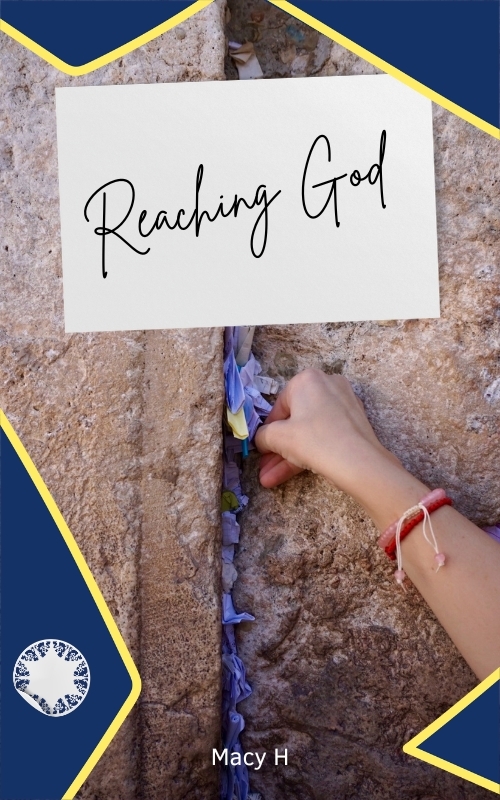
Les quelques minutes qu'il m'a fallu pour marcher jusqu'au Kotel ont toutes mené au moment où j'ai posé ma main dessus. Lorsque ma paume et mes doigts ont reposé contre une pierre vieille de milliers d'années, il m'a semblé que Dieu a pris ma main et l'a tenue en retour. Tout mon corps s'est enflammé, consumé par quelque chose d'inconcevable que je ne pouvais pas comprendre et que je ne comprends toujours pas.
En termes simples, je suppose que je dirais que le monde autour de moi est devenu étroit. Quiconque a visité le Kotel pourra vous dire combien c'est bondé ; il faut se battre pour avoir une place contre le mur et, même alors, plusieurs personnes seront pressées contre vous, désespérées de dire leurs prières et de parler à Dieu. C'est généralement trop stimulant et accablant, mais au moment où j'ai posé ma main contre cette pierre, tout a disparu.
Il n'y avait pas de prières murmurées ni de cris remplissant mes oreilles, pas de corps pressés contre le mien, pas de soleil du soir réchauffant ma peau ; il n'y avait que Dieu, seulement la pierre, et rien d'autre.
Je ne suis pas vraiment sûre du temps que j'ai passé là-bas, lisant des prières dans un siddour avant de les abandonner pour simplement parler à Dieu, mais dans mes souvenirs, cela ressemble à une éternité. J'ai dit une fois, dans une dissertation pour un module universitaire, qu'en m'éloignant, finalement, du Kotel, sans tourner le dos au mur de pierre, j'avais l'impression de ne jamais cesser de lui faire face, comme si, depuis ce moment-là, chaque instant de ma vie, je lui faisais face. Ces mots résonnent encore en moi.
Ainsi, c'est ce jour-là, il y a vingt mois, au moment où j'écris ces lignes, qui a sculpté chaque instant depuis. Je parle fréquemment à Dieu et, bien que je ne ressente jamais tout à fait ce que j'ai ressenti ce Shabbat au Kotel, je sais que je suis entendue. La connexion que j'ai faite là-bas, entre la chair, la pierre et Dieu, est incassable, je le sais ; elle m'a donné de la force pendant les périodes difficiles, m'a apporté de la gratitude pour les choses et les personnes autour de moi, et m'a montré de la joie là où elle avait autrefois disparu.
Ce que je veux dire, c'est que, oui, j'ai effectué quelques changements visibles depuis. Je parle plus de Dieu, je m'habille différemment, je vis ma foi d'une manière différente, mais rien de tout cela ne se compare au changement unique en moi ; celui où je vois et ressens Dieu dans tout, partout, à tout moment.
In the past year or so, I’ve spoken (and written) a lot about how my relationship with God and my faith has changed. Mostly, this has involved the things that are visible to those around me; no longer wearing trousers, observing holidays and Shabbat more closely, and focusing on my religion in my daily life, but there is a more personal, more intrinsic difference within myself that most people don’t see – perhaps because it isn’t so obvious to them.
In April 2023, I visited Israel for the first time and I have thought about it most days since. When I look back, I can pinpoint the day that I visited the Kotel, Shabbat, as the day when everything in my life changed. I can still remember the most minor details from that evening, from what I was wearing – a white shirt with embroidered sunflowers and a yellow dress – to the weather in Jerusalem – warm, but not suffocatingly so. It’s like that day is etched into my mind, those moments where everything stood still and raced forwards simultaneously.
I think, still, of the apprehensive steps I took down towards the Kotel, with hands covering my eyes and butterflies escaping the nest of my stomach. In truth, I felt nauseous; I had so many worries, mostly that I wouldn’t feel anything at all or, even worse, that it would feel wrong in some way. It’s almost confusing to me how these were the thoughts that consumed my mind in those moments, yet I still remember every step, every stone under my feet, every miniscule, seemingly unimportant thing, but I’m infinitely grateful that I do.
I think, still, of the apprehensive steps I took down towards the Kotel, with hands covering my eyes and butterflies escaping the nest of my stomach. In truth, I felt nauseous; I had so many worries, mostly that I wouldn’t feel anything at all or, even worse, that it would feel wrong in some way.
I realise that my worries were a result of overthinking, but I’d seen so many people talking about how their experience at the Kotel, especially their first, had shaped them in some way and how it had become such an important aspect of who they are. I wanted that for myself; I wanted that life-altering moment, that singular experience that would define who I was and who I would become. What I didn’t realise, through all of my anxieties, through all of my expectations, was just how much would change, not just for me, but within me, too.
The few minutes that it took me to walk up to the Kotel all led to the moment that I placed my hand upon it. When my palm and my fingers rested against stone thousands of years old, it felt to me as though God took my hand and held it in return. My entire body felt alight, consumed by something inconceivable that I couldn’t understand and still fail to.
When my palm and my fingers rested against stone thousands of years old, it felt to me as though God took my hand and held it in return.
In the simplest terms, I suppose I would say that the world around me became narrow. Anyone who has visited the Kotel will be able to tell you how busy it is; you have to push for your place at the wall and, even then, there will be multiple people pressed up against you, desperate to say their own prayers and to speak to God. It is, generally, overstimulating and overwhelming, but the moment that I placed my hand against that stone, all of it disappeared.
There were no whispered prayers or cries filling my ears, no bodies pressed against my own, no evening sun warming my skin; there was just God, just stone, and nothing else.
I’m not entirely sure of how long I stood there, reading prayers from a siddur before abandoning them in favour of simply talking to God, but in my memories, it feels like a lifetime. I said once, in an extended essay for a university module, that when I walked away, eventually, from the Kotel, not turning my back on the stone wall, I felt as though I never stopped facing towards it, as though every moment of my life since, I have been turned towards it. Those words still ring true for me.
So, it’s that day, twenty months ago as I write this, that has sculpted every moment since. I speak to God frequently and, though I never quite feel the way I did that Shabbat at the Kotel, I know I’m being heard. The connection I made there, between flesh and stone and God, is unbreakable, I know that; it has given me strength through difficult times, brought me gratitude for the things and people around me, and showed me joy in the places where it had once been absent.
What I mean to say is that, yes, I have made a few changes outwardly since. I talk of God more, I dress differently, I observe my faith in a different way, but none of that compares to the singular change within me; that I see and feel God in everything, everywhere, at all times.
So, it’s that day, twenty months ago as I write this, that has sculpted every moment since. I speak to God frequently and, though I never quite feel the way I did that Shabbat at the Kotel, I know I’m being heard.
Scrolle nach unten zu
unserer aktuellen Kollektion.
Deine Geschichte könnte die nächste sein!

Kaleidoscope ist ein Projekt der Rothschild Foundation Hanadiv Europe
- Design by Creative Interpartners
- Website by Beachshore